Engineering · Intermediate · 12 min read
From n8n to LangGraph: When Automation Needs Software Engineering
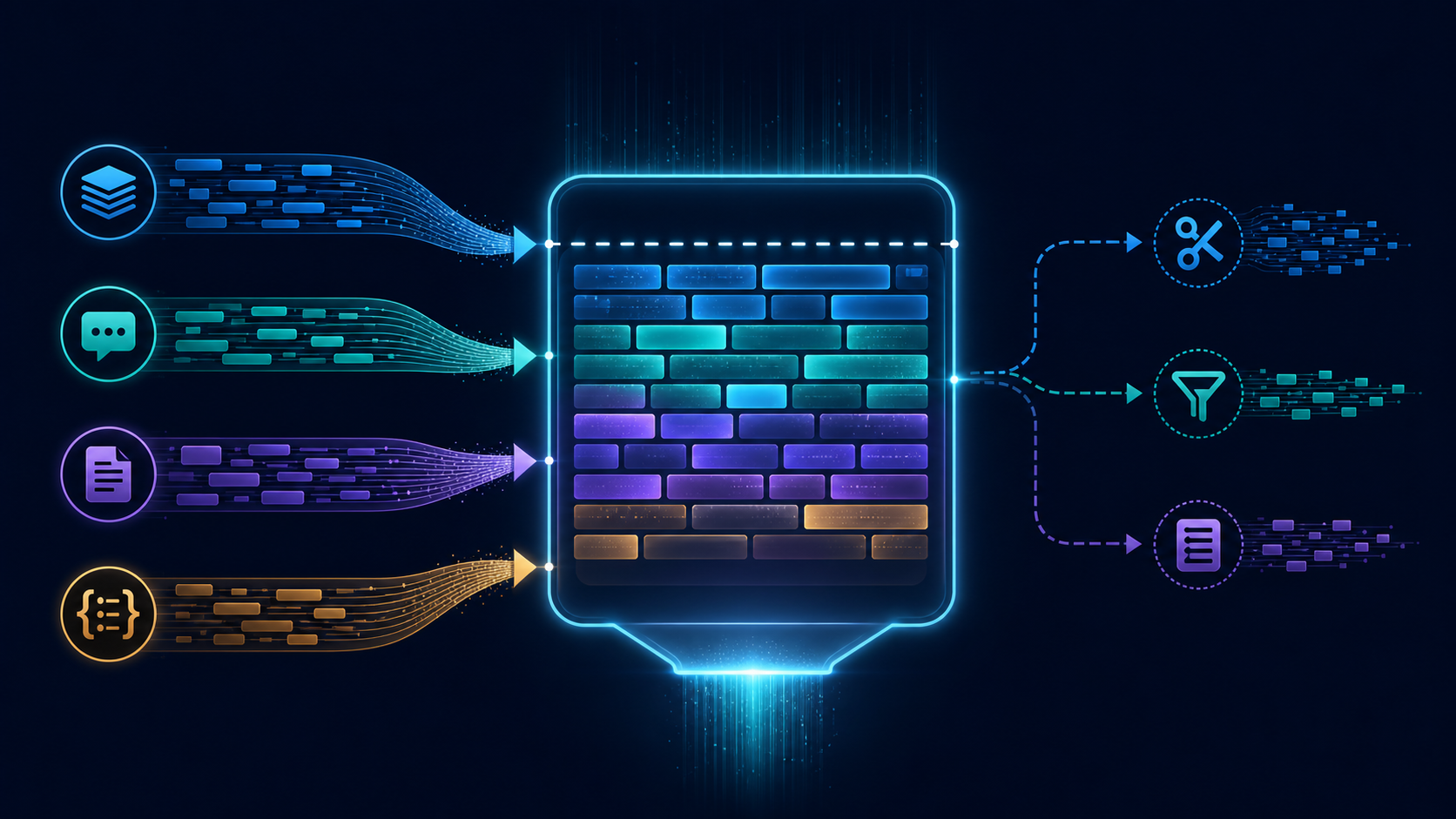
A workflow is ready to leave the canvas when its difficult part is no longer connecting services, but preserving state, controlling retries, and proving what happened. This guide explains how to recognize that boundary and migrate the process core without rewriting everything at once.
n8n is useful when a process can be described as a visible sequence: receive an event, call an API, transform a payload, and notify someone. That model becomes less comfortable when the process must pause, resume, branch on durable data, retry selectively, or coordinate several independent workers.
LangGraph is one possible code-oriented runtime for graph-shaped agent and automation processes. The important decision is not whether one tool is better than another. It is whether the process needs the engineering properties of a program: explicit state, tested transitions, controlled side effects, observable failures, and repeatable deployments.
Start with the failure mode, not the tool
A migration is justified by a recurring operational problem, not by the novelty of a framework. Before changing implementation, record the last few incidents or manual interventions. For each one, answer four questions:
- What input started the run?
- What state was known at each decision?
- Which external operation had already happened?
- Could the run be safely resumed or repeated?
If these answers are available only by opening execution logs and reconstructing a timeline, the workflow is already carrying hidden state. Hidden state is often the first sign that the process core needs a more explicit design.
A concrete case: document review with human approval
Consider an example workflow that receives a document, extracts fields, checks them against business rules, asks a human to approve exceptions, and sends the result to two systems. The example is intentionally generic: it describes a design pattern, not a claim about a particular customer or production system.
A simple version fits a visual workflow:
Webhook → Extract → Validate → Notify → Write result.
Problems appear when validation produces three possible outcomes. A clean document can continue. An uncertain document needs human review. A failed extraction should be retried, but only after checking whether the downstream write already succeeded.
At that point, the important data is not just the current payload. It includes the review status, attempts made, external identifiers, approval decisions, and the version of the rules used. Treating all of that as a mutable blob passed between nodes makes recovery difficult.
Migration criteria
No single threshold proves that a migration is necessary. Use the following criteria as a decision record. The more answers are “yes”, the stronger the case for moving the process core into code while leaving simple integrations in the automation layer.
| Question | Stay visual for now | Consider code and orchestration |
|---|---|---|
| Can a run finish in one pass? | Yes; failures can be restarted from the beginning. | No; it must pause, resume, or await an event. |
| Are branches easy to explain? | They are short and mostly data mapping. | They depend on many conditions or prior attempts. |
| Are retries safe? | Operations are read-only or naturally repeatable. | Retries can duplicate writes, messages, or approvals. |
| Can operators diagnose a run? | Inputs, outputs, and errors are visible together. | They must infer state from several systems. |
| Does behavior need tests? | Configuration checks are sufficient. | Transitions and recovery paths need automated tests. |
| How often does logic change? | Occasionally, by a small team. | Frequently, with review, releases, and rollback. |
A practical heuristic is to count the number of distinct recovery paths rather than the number of nodes. Ten straightforward nodes may be easier to operate than four nodes that can pause at different points and perform irreversible actions.
Separate state from side effects
The central design move is to separate the decision process from operations that change the outside world. In this article, state means the durable facts needed to decide what happens next. A side effect is an external operation such as sending a message, creating a ticket, or writing to a database.
A useful state record might look like this:
{
  "run_id": "example-run-001",
  "input_ref": "document-123",
  "status": "awaiting_review",
  "extraction": {
    "confidence": 0.82,
    "fields": {}
  },
  "review": {
    "required": true,
    "decision": null
  },
  "effects": {
    "result_write": "not_started",
    "notification": "not_started"
  },
  "attempts": {
    "extraction": 1,
    "result_write": 0
  },
  "rules_version": "example-2026-01"
}
The values above are illustrative. They show the shape of a record, not a required schema. The useful property is that a future run can answer “what is true?” without replaying every previous action.
Keep effect status separate from business status. “Approved” is a business fact. “Notification sent” is an operational fact. Confusing them creates dangerous retries: an operator may see an approved item and assume every downstream effect completed.
Model the process as transitions
A code-based process becomes easier to test when each step is a transition from one state to another. For the example, the transition table could be:
| Current state | Event | Next state | External effect |
|---|---|---|---|
| received | extraction succeeds | validated | None |
| validated | confidence is low | awaiting_review | Create review request |
| awaiting_review | review approved | ready_to_publish | None |
| ready_to_publish | publish requested | published | Write result and notify |
| any active state | transient failure | retryable | Only the failed operation may retry |
This is a small state machine. It does not need to be complicated. Its value is that allowed transitions and forbidden transitions become explicit. For example, a review callback should not publish a document whose extraction never completed.
Use idempotency as a migration requirement
Idempotency means that repeating the same logical operation does not create an unintended additional result. It is essential whenever an orchestrator can retry a step after a timeout. A timeout does not prove that the external system did nothing; it only proves that the caller does not know what happened.
Give each externally visible operation a stable key derived from the run and operation, for example:
idempotency_key = run_id + ":" + operation_nameThe receiving system must either support that key or you must maintain a durable operation record. The exact implementation depends on the API. Do not assume that adding a header makes a non-idempotent API safe.
For a migration, begin with the most dangerous effect: a payment, publication, duplicate message, or irreversible update. Make that operation safe before moving more logic into code.
A staged migration plan
Stage 1: Freeze the behavior map
Export or document the current workflow. Record triggers, inputs, branches, credentials by reference only, external writes, retry settings, and manual steps. Remove secrets from examples and documentation. This stage should produce a behavior map, not a redesign.
Stage 2: Add correlation and effect records
Introduce a stable run identifier and record each important external operation. If the existing tool can write these records, use it before introducing a second runtime. The goal is to make current behavior observable and to identify duplicate-effect risks.
Stage 3: Extract pure decision logic
Move parsing, validation, and routing rules into a small library or service. Keep API calls in the existing workflow at first. A pure function is easier to compare against current behavior:
def decide(document):
    if document["extraction_confidence"] < 0.85:
        return "awaiting_review"
    if not document["required_fields_present"]:
        return "needs_correction"
    return "ready_to_publish"
The threshold in this snippet is an example only. Use the rule values that your process actually defines, and test boundary cases explicitly.
Stage 4: Introduce a controlled graph
Represent the process as named nodes and transitions in the code runtime. Keep nodes small: load state, evaluate a rule, request approval, apply an effect, and record the result. A graph runtime is most useful when it makes waiting, resuming, and branching explicit; it is not a reason to put every line of business logic into a separate node.
Stage 5: Move one effect at a time
Route one operation through the new core while the surrounding workflow remains unchanged. Compare decisions, effect records, latency, and failure handling. Then move the next operation. Avoid running two implementations that can both perform the same write unless ownership is explicitly controlled.
Stage 6: Retain the visual layer as an adapter
The automation tool can remain responsible for webhooks, schedules, simple notifications, and administrative connections. The code service owns process state and transitions. This boundary reduces migration risk and keeps the visual layer useful without making it the source of truth for complex behavior.
Reproducible verification
Verification should test both normal execution and recovery. The following commands are illustrative and assume a Python project with a test runner; adapt them to the repository you actually use:
# create an isolated environment
python -m venv .venv
. .venv/bin/activate

# install the project's declared dependencies
python -m pip install -r requirements.txt

# run unit tests
python -m pytest

# run the process with a fixed example input
python -m app.run examples/document-approved.json
A minimal verification matrix should include:
- the same input produces the same decision;
- a transient failure retries only the intended operation;
- a repeated callback does not create a second effect;
- a process can resume from stored state;
- an invalid transition is rejected and recorded;
- an operator can find the run, state, error, and effect history.
Compare the old and new implementations using recorded fixtures rather than live customer data. Fixtures should contain synthetic identifiers and no credentials or personal information.
Common failure cases
Rebuilding the canvas node for node
A visual workflow often contains incidental ordering, implicit variables, and tool-specific retry behavior. Copying every node into code preserves those ambiguities. Extract the behavior and invariants first; then choose a code structure that makes them testable.
Putting side effects inside decision functions
A function that both decides “publish” and performs the publication is difficult to retry safely. Keep the decision pure where possible, then pass an explicit command to an effect handler that records its idempotency key and result.
Using logs as the database
Logs explain what the program reported, but they are not a durable state model. Store the minimum recovery data explicitly. Include timestamps and correlation identifiers in logs so they can be connected to that state.
Changing behavior and runtime at the same time
If business rules, integrations, and orchestration all change in one release, a failure has too many possible causes. Keep the first migration behaviorally equivalent. Improve the rules after the new execution model is observable.
Limitations and trade-offs
Moving to code does not automatically improve reliability. It adds deployment, dependency management, monitoring, access control, and maintenance work. A small workflow with infrequent changes may be cheaper and safer in a visual tool.
A graph runtime also does not remove the need to design external effects. It can persist or resume process state, but it cannot make an API transactional unless the API and your design support that guarantee. Long-running workflows still need retention rules, cancellation behavior, schema migration, and operator procedures.
Finally, the boundary is not permanent. A process can move back toward a simpler workflow if its requirements become stable and its recovery paths disappear. Treat the architecture as an operational decision that can be revisited.
Decision checklist
Before approving a migration, make sure the team can answer “yes” to the following:
- Is the current failure mode documented with a reproducible example?
- Is durable state distinct from payload data and logs?
- Are external effects identified and assigned stable operation keys?
- Are transitions and forbidden states testable without live integrations?
- Can the process resume without replaying completed effects?
- Is ownership between the visual workflow and code runtime explicit?
- Can the team deploy, observe, roll back, and support the new component?
The practical answer to “From n8n to LangGraph: When Automation Needs Software Engineering” is therefore not a node count or a framework preference. Migrate when the process needs explicit, durable behavior over time. Start by separating state from side effects, extract and test decisions, then move orchestration and effects in small, observable stages.
Continue with the guides or check the glossary for the terms used in this article.